Understanding Vertical Injection Moulding Machines: A Comprehensive Guide
In modern manufacturing, plastic components are everywhere—from household goods and automotive parts to electronics and medical devices. However, producing these components efficiently and with high precision can be challenging. Among the many technologies that address this need, vertical injection moulding machines have gained significant attention for their ability to simplify processes such as insert moulding, overmoulding, and multi-material moulding.
This guide provides a detailed overview of vertical injection moulding machines, their working principles, structure, and why they play such an important role in the plastics industry.
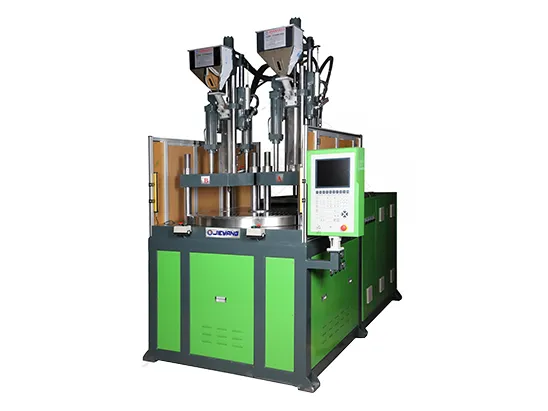
What Are Vertical Injection Moulding Machines?
Vertical injection moulding machines are specialized systems in which both the clamping unit and the injection unit are positioned vertically. Unlike conventional horizontal moulding machines, where operations occur on a horizontal plane, the vertical setup offers a more compact footprint and unique advantages for specific applications.
Key characteristics of vertical machines include:
Vertical clamping and injection direction, ensuring secure placement of inserts.
Compact design, which saves valuable floor space in factories.
Flexibility for multi-process moulding, including insert moulding, overmoulding, and two-colour or two-material production.
Why Are They Important?
The vertical configuration provides benefits that directly impact both efficiency and product quality:
Secure Insert Placement
Inserts remain in place due to gravity and vertical clamping, reducing the risk of shifting inside the mould cavity.Space Efficiency
The stacked layout allows manufacturers to maximize production capacity within a smaller physical footprint.Higher Productivity
Machines can be equipped with sliding tables, rotary tables, or multi-station moulding systems, enabling simultaneous operations and increased output.Enhanced Precision
Vertical injection improves control over material flow, ensuring accurate filling of mould cavities and consistent part quality.
How Do Vertical Injection Moulding Machines Operate?
These machines generally combine electronic control systems with hydraulic power, delivering both precision and strength.
Operation Modes
Machines can run in Manual, Semi-automatic, Full Automatic, or Setup modes, depending on production needs.Parameter Settings
Operators can program essential parameters such as:Clamping pressure, speed, and position
Injection pressure, speed, and position
Clamping force levels
Hydraulic Function
Electrical signals are converted into hydraulic pressure, which drives cylinders to perform the required tasks.Temperature Control
The plastic material melts inside a heated barrel, with temperatures precisely managed by thermocouples and electronic control systems.Energy Efficiency
Many modern vertical machines utilize servo-hydraulic packages that ensure high accuracy, reduced energy consumption, and extended operational life.
Structure of Vertical Injection Moulding Machines
The structure is divided into two main parts:
1. Clamping Unit
Opens and closes the mould.
Maintains sufficient clamping force to hold the mould securely during injection.
Plays a vital role in ensuring defect-free production.
2. Injection Unit
Melts raw material (typically thermoplastic granules).
Injects the molten material into the mould cavity under controlled pressure and speed.
Works in synchronization with the clamping unit for precise moulding results.
Applications of Vertical Injection Moulding Machines
Vertical machines are particularly well-suited for:
Insert moulding: embedding metal, electronics, or other components into plastic parts.
Overmoulding: coating or bonding a plastic layer over another material or substrate.
Two-colour / two-material moulding: producing complex parts with multiple colours or materials in a single cycle.
Space-sensitive operations: when factory floor space is limited, the compact vertical design is advantageous.
Conclusion
Vertical injection moulding machines represent a crucial advancement in the plastics industry. Their ability to combine compact design with high precision makes them ideal for insert moulding, overmoulding, and multi-material production. With features that enhance accuracy, efficiency, and output, these machines have become indispensable for manufacturers looking to balance quality with productivity.
As industries demand increasingly complex plastic components, vertical injection moulding machines will continue to play a central role in driving innovation and efficiency in manufacturing.


评论
发表评论